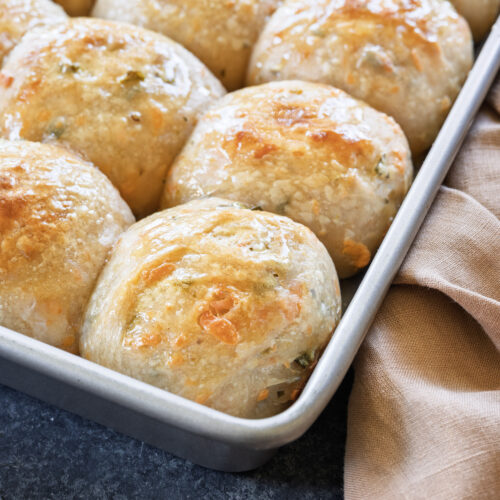
Jalapeño Cheddar Sourdough Pull Apart Rolls
Soft, fluffy, and naturally leavened, these Jalapeño Cheddar Sourdough Pull Apart Rolls are packed with sharp cheddar and tangy pickled jalapeños. A touch of olive oil keeps the crumb tender and pillowy, making them the ultimate savory side for cozy dinners, holiday spreads, or hearty slider buns.
Equipment
Ingredients
- 200 g active bubbly sourdough starter (100% hydration)
- 244 g water
- 1 Tbsp extra virgin olive oil
- 417 g all-purpose flour
- 20 g whole wheat flour
- 10 g fine sea salt
- 1 tsp garlic powder
- 100 g sharp cheddar cheese freshly shredded
- 65 g pickled jalapeños drained, patted dry, and chopped
Finishing Ingredients
- Egg wash 1 egg beaten with 1 Tbsp water
- Melted unsalted butter for brushing after baking
Instructions
- Mix the wet ingredients. In a large mixing bowl, whisk together the active sourdough starter, water, and olive oil until combined.
- Add the dry ingredients. Add the all-purpose flour, whole wheat flour, salt, and garlic powder. Mix with a spoon until a shaggy dough forms. Finish mixing by hand until all the flour is incorporated. Knead until the dough becomes smoother. It may still have a few rough spots and stick slightly to the bowl, and that's okay.TIP: I like to rinse and dry my mixing bowl, then lightly coat it with olive oil before returning the dough to the bowl. This keeps the bowl cleaner and prevents any dried bits of dough stuck to the sides from getting mixed into the dough. This step is completely optional, but it's something I like to do.
- Rest the dough. Cover the bowl with plastic wrap and allow the dough to rest for 30 minutes.
- First stretch and fold. Perform one set of stretch and folds. Cover the bowl and allow the dough to rest for another 30 minutes.
- Add the cheddar and jalapeños. Sprinkle the shredded cheddar and well-drained, chopped pickled jalapeños over the dough. Perform another set of stretch and folds to gently incorporate the mix-ins. Cover and allow the dough to rest for 30 minutes.
- Final stretch and fold. Perform one final set of stretch and folds. Cover the bowl and allow the dough to rise until it has increased in volume by approximately 75–100%.
- Divide the dough. Transfer the dough to a clean work surface and weigh it. The total weight should be around 1030g. Divide the total weight by 12 to determine the weight of each roll. Each roll should weigh approximately 86g each. Cut the dough into 12 equal portions.
- Shape the rolls. Shape each portion into a smooth, round dough ball, tucking the cheddar and jalapeños inside as much as possible. Arrange the rolls in a lightly greased 9×13-inch baking dish in three rows of four. Lightly dust the tops with flour to help prevent sticking to the covering during the final proof.
- Final proof. Cover the baking dish with plastic wrap or a clean tea towel. Allow the rolls to rise until noticeably puffy and touching one another. This may take approximately 1–2 hours in a warm Florida kitchen. If your kitchen is cooler, it may take longer. The dough should spring back slowly when gently pressed with a fingertip.Note: My power went out during the final proof, so I ended up putting the rolls in the refrigerator overnight and baking them the following morning. They were refrigerated for approximately 14 hours.
- Preheat the oven. Preheat the oven to 400°F. Place a sturdy, rimmed metal baking sheet on the rack below where the baking dish will sit. If using an egg wash, gently brush the tops of the rolls just before baking.
- Bake the rolls. After placing the rolls in the oven, carefully pour hot water into the preheated baking sheet on the rack below to create steam. Bake for approximately 22–28 minutes, or until the tops are golden brown and the center rolls reach an internal temperature of 195–205°F. If the tops begin browning too quickly, loosely tent the baking dish with aluminum foil.
- Cool and serve. Allow the rolls to cool in the baking dish for 5–10 minutes before separating and serving. For softer tops, brush the warm rolls with melted butter, if desired.
Notes
For the fluffiest, best-textured rolls, weigh your ingredients with a digital kitchen scale! Sourdough dough can be finicky with moisture, and using cups often adds too much flour and makes the rolls dense.
This recipe was originally inspired and adapted from King Arthur’s Crusty European-Style Rolls recipe. I tweaked the flour, swapped commercial yeast for active sourdough starter, and added olive oil, cheddar, and pickled jalapeños to turn them into soft, fluffy pull-apart dinner rolls.